
Cable Assembly Manufacturing Process: From Design Requirements to Final Production
Introduction
Cable assemblies play an important role in modern electronic equipment, industrial systems and smart devices. Although a cable assembly may appear simple from the outside, producing a reliable assembly requires careful planning, accurate processing and strict quality control.
A professional cable assembly manufacturer does much more than connect wires and connectors. The manufacturing process involves reviewing customer requirements, selecting suitable materials, preparing cables, installing terminals or connectors, performing electrical tests and ensuring every assembly meets the required specifications.
For OEM customers, understanding the cable assembly manufacturing process helps them choose the right manufacturing partner and avoid problems such as incorrect wiring, poor connector reliability or production delays.
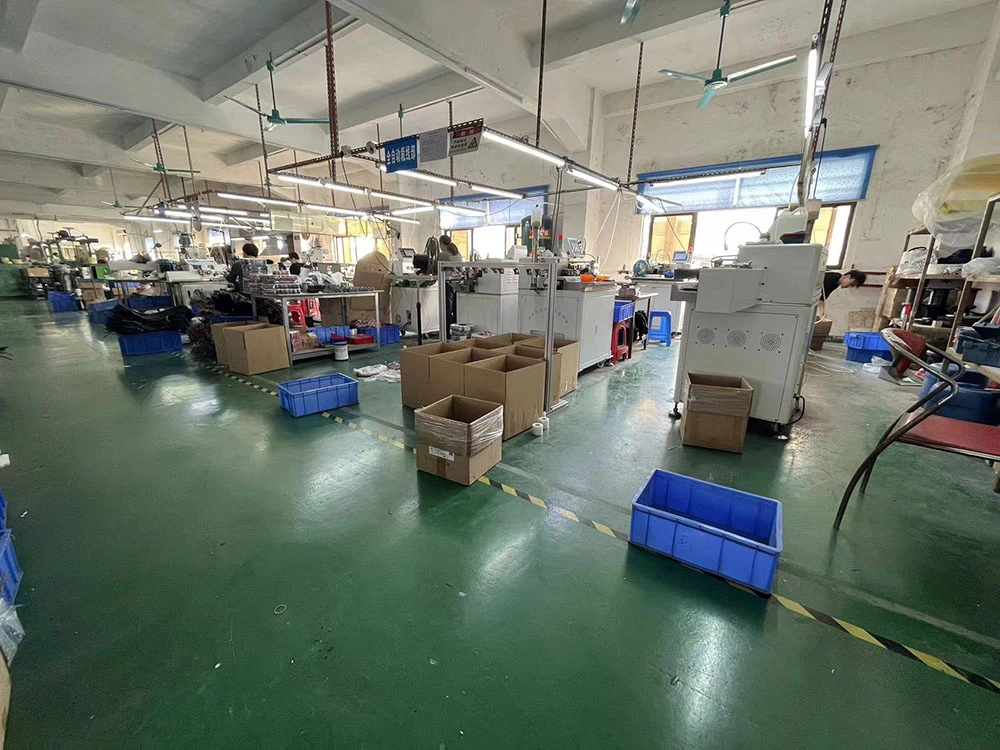
1. Engineering Review and Project Confirmation
Before production begins, a cable assembly manufacturer first reviews the customer’s requirements.
This stage is important because every cable assembly is usually customized according to the equipment design.
The manufacturer may review:
- Product drawings
- Cable specifications
- Connector part numbers
- Wire gauge requirements
- Pin configuration
- Cable length
- Application environment
- Production quantity
For customers without complete drawings, manufacturers may also review samples or existing cable assemblies to understand the required structure.
A clear engineering review helps prevent production issues before materials are purchased or manufacturing starts.
For example, a cable assembly used inside a smart appliance may require compact connectors and flexible routing, while an industrial control application may require stronger mechanical protection and stable electrical performance.
2. Material Selection and Preparation
After confirming the design requirements, the next step is preparing the required materials.
A cable assembly usually consists of several components:
- Wire or cable
- Terminals
- Connectors
- Connector housings
- Heat shrink tubing
- Sleeving materials
- Labels or protective components
Different applications require different material choices.
For example:
- Flexible equipment may require softer cable materials.
- High-temperature environments may require special insulation.
- Sensitive electronic systems may require shielding to reduce interference.
During production preparation, manufacturers verify that incoming materials match the approved specifications.
Proper material selection is important because the reliability of a cable assembly depends not only on the connector but also on the cable structure and termination quality.
3. Wire Cutting and Stripping
The manufacturing process begins with precise cable preparation.
The cable is cut according to the required length from the engineering specification or customer drawing.
Accurate cutting is important because cable length affects:
- Installation space
- Equipment assembly
- Signal performance
- Mechanical stress
After cutting, the insulation is removed from the wire ends through the stripping process.
The stripping operation must expose the correct amount of conductor without damaging the copper strands.
Incorrect stripping can create problems such as:
- Weak terminal connections
- Reduced electrical performance
- Potential long-term reliability issues
Professional manufacturers use suitable tools and production controls to maintain consistent processing quality.
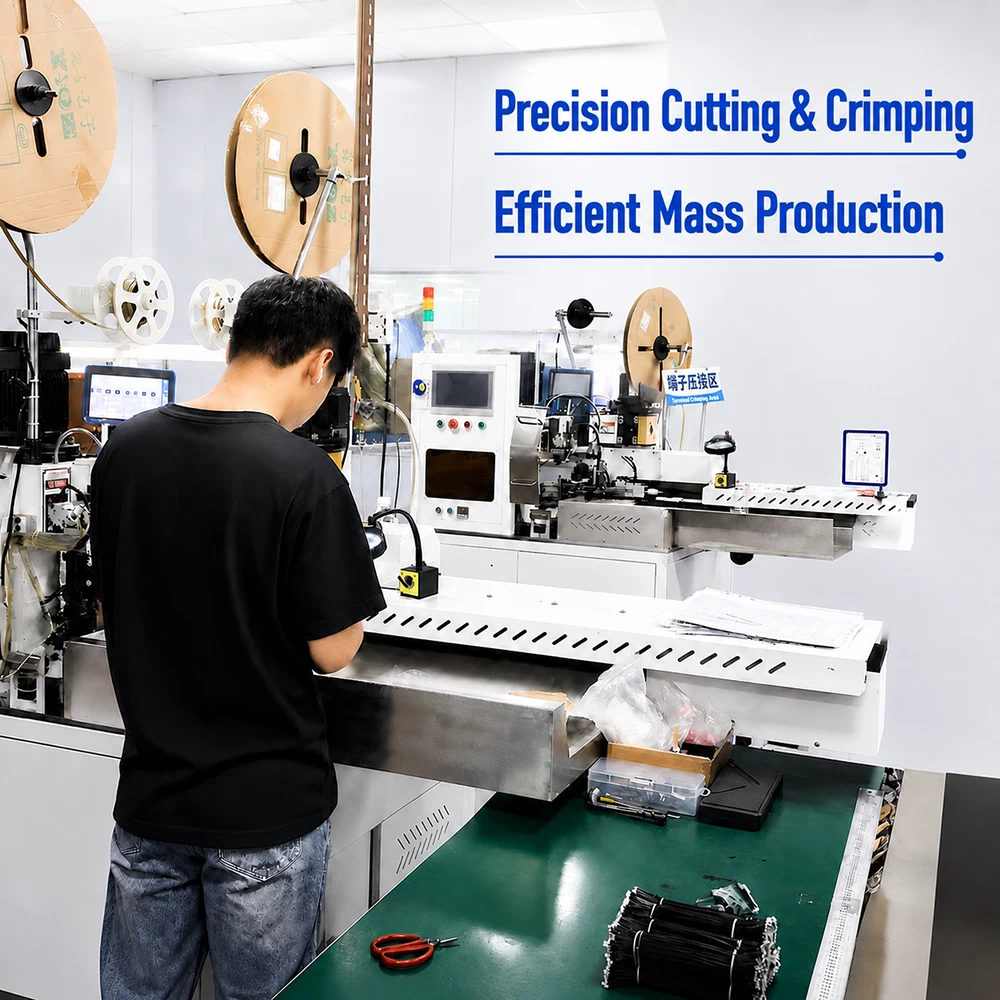
4. Terminal Crimping and Connector Assembly
Terminal crimping is one of the most important steps in cable assembly manufacturing.
During crimping, a metal terminal is attached to the conductor to create a reliable electrical and mechanical connection.
A proper crimp connection requires:
- Correct terminal selection
- Suitable tooling
- Proper crimp height
- Correct wire positioning
After crimping, terminals are inserted into connector housings according to the required pin arrangement.
This step requires careful attention because incorrect pin positions can cause equipment malfunction even when the cable looks visually correct.
For products such as JST cable assemblies, Molex cable assemblies and custom connector cables, connector orientation and wiring sequence must match the approved specification.
5. Cable Routing, Protection and Assembly
Depending on the application, additional assembly processes may be required.
Common protection methods include:
Heat Shrink Tubing
Used to provide insulation and additional mechanical protection.
Sleeving
Used to organize multiple wires and improve abrasion resistance.
Labeling
Used for identification during equipment assembly and maintenance.
Strain Relief
Helps reduce stress on connector joints caused by repeated movement.
These additional processes are especially important for industrial equipment, robotics, smart devices and other applications where cables operate in demanding environments.
6. Electrical Testing and Quality Inspection
Quality control is a critical part of the cable assembly manufacturing process.
A professional wire harness manufacturer does not only inspect appearance but also verifies electrical performance.
Common tests include:
Continuity Testing
Checks whether each conductor is correctly connected from one end to another.
This helps identify:
- Open circuits
- Incorrect wiring
- Missing connections
Pin Verification
Confirms that connector pins match the required wiring diagram.
This is especially important for multi-pin connectors.
Insulation Testing
Checks whether insulation performance meets the required application conditions.
Visual Inspection
Operators inspect:
- Connector installation
- Wire positioning
- Crimp quality
- Cable length
- Label placement
Testing requirements may vary depending on the application and customer specification. Many manufacturers perform electrical checks on finished assemblies before shipment.
7. Packaging and Delivery Preparation
After passing inspection, finished cable assemblies are prepared for shipment.
Packaging requirements depend on:
- Connector type
- Cable structure
- Customer requirements
- Transportation conditions
Proper packaging protects connectors from damage and prevents cable deformation during transportation.
For OEM customers, consistent packaging also helps improve receiving and assembly efficiency.
8. How to Choose the Right Cable Assembly Manufacturer
Choosing a suitable manufacturing partner is an important decision for OEM projects.
Customers should consider:
Manufacturing Capability
Can the supplier produce different cable structures, connectors and customized assemblies?
Engineering Support
Can the supplier understand drawings, samples and application requirements?
Quality Control Process
Does the manufacturer perform electrical testing and inspection before shipment?
Production Flexibility
Can they support prototype orders as well as repeat production?
A reliable cable assembly manufacturer should not only provide products but also help customers solve wiring challenges during product development.
Conclusion
The cable assembly manufacturing process involves much more than attaching connectors to wires. From engineering review and material preparation to cable processing, connector assembly and final testing, every step affects the reliability of the finished product.
For OEM customers, working with an experienced cable assembly manufacturer can reduce production risks, improve product consistency and simplify the development process.
At Fengzhan Electronics, we provide customized cable assembly and wire harness solutions for electronic equipment, industrial applications and OEM projects. By combining flexible production capabilities with quality-focused manufacturing processes, we help customers develop reliable wiring solutions for their products.