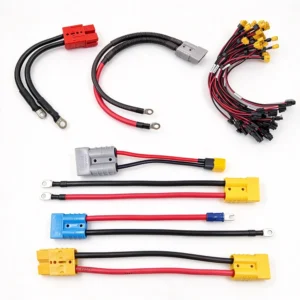
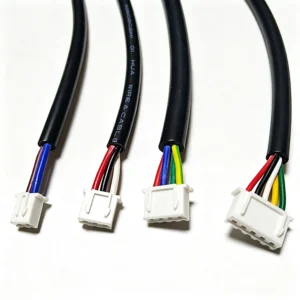
Custom overmolded cable assemblies that integrate cables, connectors and molded protection into a single assembly. Fengzhan can customize the cable length, connector type, molding shape, cable exit direction, overmolding material, shielding and other construction details according to your OEM requirements.
Overmolded cable assemblies are designed for applications where the cable-to-connector transition requires additional mechanical support, strain relief or integrated protection.
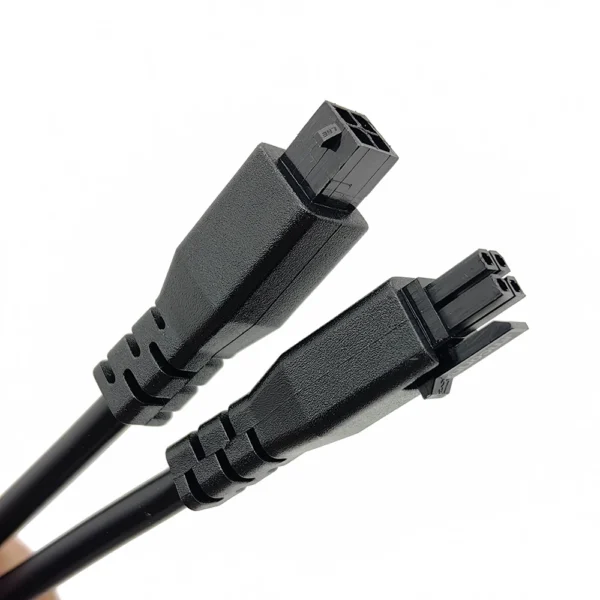
An overmolded cable assembly is a cable assembly in which a molded material is formed around the cable-to-connector transition or another defined section of the assembly. The molded structure creates an integrated outer body that can provide strain relief, connector support and mechanical protection.
Compared with a conventional cable assembly that uses separate components such as heat-shrink tubing or protective sleeves, overmolding integrates the protection directly into the cable assembly. The shape, material, connector configuration and cable exit can be customized according to the equipment design.
Fengzhan provides custom overmolded cable assemblies based on customer drawings, samples, connector specifications, wiring requirements and project-specific construction requirements.
Overmolded cable solutions are widely used where cable connections require additional protection, durability and stable performance. They are commonly found in industrial equipment, smart devices, medical electronics and automation systems requiring reliable cable integration.
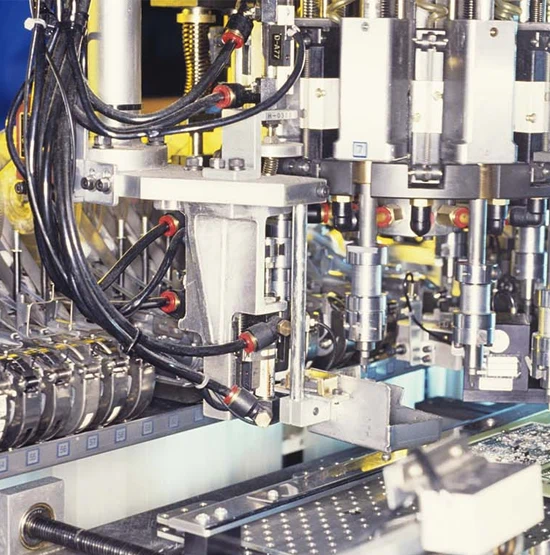
Overmolded cable assemblies can connect sensors, controllers, motors, switches and other electrical components used in industrial equipment. Custom molding shapes and cable exits can help the assembly fit the available installation space and cable routing requirements.
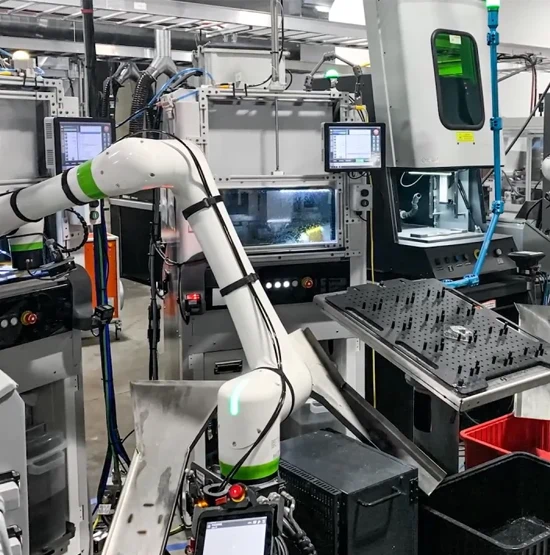
Sensor and control systems may require cable assemblies with specific connectors, pinouts, shielding and mechanical configurations. Custom overmolding can be applied around the required connection area to provide an integrated cable solution.
Electronic and medical equipment may require compact cable assemblies with defined connector configurations and controlled cable routing. Overmolded structures can be customized around the connection area to provide mechanical support and a cleaner integrated assembly.
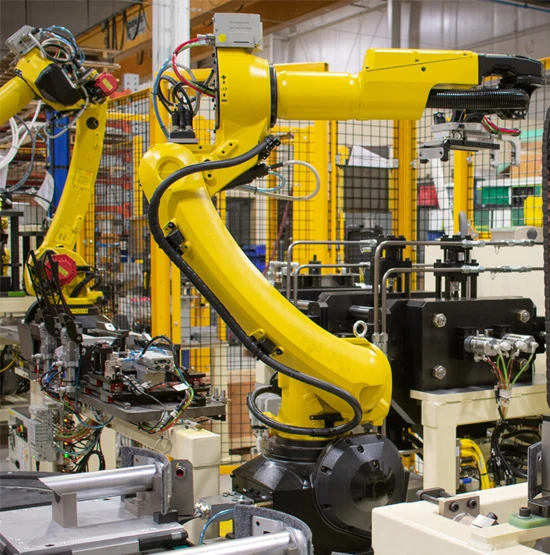
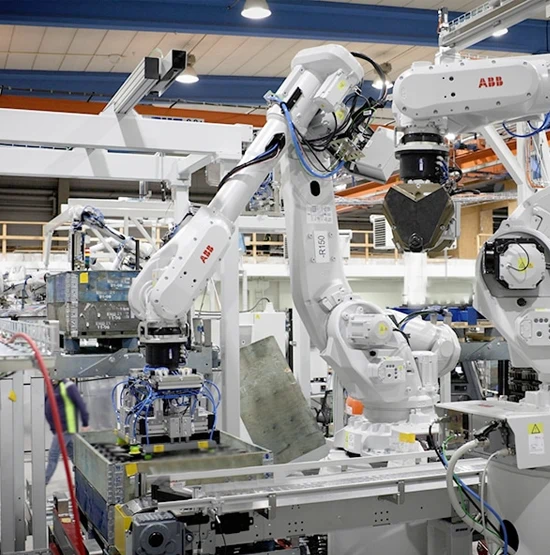
Robotic equipment may expose cable connections to repeated movement, bending or mechanical stress. An overmolded cable assembly can provide additional support around the connector-to-cable transition while allowing the cable length, connector configuration and molding structure to be customized for the robot design.
The main function of overmolding is to create a stronger connection between cables and connectors. The molded structure protects critical connection points while improving reliability in applications exposed to mechanical stress, movement or environmental conditions.
The molded structure supports the cable near the connector exit and helps distribute mechanical stress caused by bending, pulling or repeated cable movement. The strain-relief geometry can be customized according to the cable construction and installation requirements.
Overmolding surrounds the defined connector transition area and provides additional mechanical support around the connection. This can help protect the cable termination and connector interface from external mechanical stress during equipment use and handling.
Overmolding combines the cable, connector and molded structure into an integrated assembly. This can reduce the need for separate protective components and provide a more organized cable connection for OEM equipment.
The molded housing provides an additional layer of material around the specified connection area. Depending on the selected material and design, the molded structure can help protect the connection from external mechanical stress, abrasion and handling.
For sensor applications requiring enhanced protection and reliable connection performance, Fengzhan also provides customized sensor cable assembly solutions for electronic and industrial equipment.
Different molding structures can be selected according to installation requirements, connector type and operating environment. Fengzhan supports customized cable configurations for various OEM applications.
A straight overmolded cable assembly uses a conventional cable exit direction from the molded connector area. This configuration is suitable for applications with sufficient installation space and straightforward cable routing. The connector, cable length, wire specification and molding dimensions can be customized according to the equipment requirements.
A right-angle overmolded cable assembly changes the cable exit direction to accommodate compact equipment layouts or specific routing requirements. The molded body can be designed around the connector and cable geometry, with the exit direction and cable length specified according to the application.
A double-ended overmolded cable assembly uses molded structures at both ends of the cable. This configuration can provide integrated protection and strain relief at two connection points. Connector type, cable length, pinout and molding design can be customized according to the equipment interface.
Shielded cable structures can be combined with overmolding when the application requires additional consideration of electromagnetic interference or signal noise. The cable shielding, connector termination and overmold design should be specified together to ensure that the complete assembly matches the intended electrical configuration.
Fengzhan’s overmolded cable solutions are designed to improve connection reliability through integrated molding structures. By combining cables, connectors and protective materials into a single assembly, they provide enhanced strain relief, mechanical protection and long-term durability for industrial equipment, electronic devices and OEM applications.
The molded structure combines the cable and connector transition into a defined assembly. Instead of relying only on separate sleeves or external protection, the overmold forms a dedicated body around the specified connection area.
The strain-relief section can be configured according to the cable diameter, connector geometry and expected cable movement. Different molding lengths and shapes can be considered according to the mechanical requirements of the application.
Cable exit direction can be configured as straight, right-angle or other project-specific designs. The exit direction can be considered together with connector orientation and installation space during the overmold design process.
The overmolded body does not have to follow a single standard shape. Dimensions, geometry and connector transition design can be customized according to customer drawings, samples and equipment installation requirements.
Depending on the project, overmolding materials such as PVC, TPU and TPE can be considered. Material selection should take into account the required flexibility, mechanical properties, operating environment and compatibility with the cable and connector.
Shielded cable structures can be incorporated into overmolded assemblies when the application requires additional signal protection. The shielding structure and connector termination should be defined as part of the complete cable assembly specification.
Traditional cable protection methods, such as heat shrink tubing or external sleeves, can provide basic protection but may not fully reinforce the connection area between the cable and connector. Overmolding creates an integrated structure by directly molding protective material around critical connection points, improving mechanical strength, strain relief and overall durability.
Compared with conventional protection methods, molded cable designs offer a cleaner appearance, better cable integration and more reliable performance in applications exposed to vibration, bending or frequent movement. This makes overmolded solutions suitable for industrial equipment, electronic devices, automation systems and other OEM applications requiring long-term connection stability.
Fengzhan can customize overmolded cable assemblies according to the electrical, mechanical and installation requirements of the target equipment. Customers can provide a drawing, sample, connector specification, BOM or basic project information for review.
- Cable length
- Wire gauge
- Number of conductors
- Wire color
- Conductor material
- Cable diameter
- Insulation material
- Connector manufacturer
- Connector part number
- Connector type
- Male / female configuration
- Connector orientation
- Terminal type
- Pin arrangement
- Straight or right-angle cable
- Overmold shape
- Overmold dimensions
- Strain-relief structure
- Connector transition design
- Single-ended
- Double-ended molding
- PVC
- TPU
- TPE
- Other molding materials
- Heat-shrink protection
- Braided sleeving
- Project-specific protection
To prepare a quotation, please provide as much of the following information as available:
A complete drawing is helpful but is not always required for an initial review. If you do not have a complete specification, send us the information, sample or connector details you have. Our team can review the available requirements and confirm the information needed for quotation.
Every cable assembly project follows controlled production procedures including connector inspection, wiring verification and electrical testing. Quality checks help ensure consistent performance and reliable connections for OEM applications.
Incoming wires, connectors, terminals, molding materials and other components are checked against the specified requirements before production.
Cable and wires are prepared according to the required finished length, stripping dimensions and assembly configuration.
Terminals are crimped according to the specified wire and terminal combination. Crimping quality is inspected according to the production requirements.
Terminated wires are assembled into the specified connector housing according to the required pinout and wiring configuration.
The assembled cable and connector are positioned in the molding process according to the specified mold structure. The selected molding material and molded geometry are controlled according to the approved project requirements.
Finished cable assemblies are checked for electrical continuity, wiring configuration and overall appearance according to the defined inspection requirements before shipment.
Overmolding and traditional protection methods such as heat-shrink tubing or external sleeves serve different design requirements.
Overmolding creates an integrated molded structure around the defined cable-to-connector transition, which can provide dedicated strain relief and mechanical support. Heat-shrink tubing and sleeves are separate protective components that may be more suitable for simpler cable protection requirements.
The appropriate solution depends on the connector geometry, cable construction, installation space, mechanical requirements, production quantity and desired product design.
For OEM projects, Fengzhan can review the available drawing, sample or application requirements and determine whether an overmolded configuration is suitable for the cable assembly.
1. What is the difference between an overmolded cable assembly and a standard cable assembly?
An overmolded cable assembly includes a molded structure around a defined section of the cable and connector transition. This integrated structure can provide additional strain relief and mechanical support. A standard cable assembly may use a connector without an injection-molded protective body.
2. Can you manufacture custom overmolded cable assemblies?
Yes. Fengzhan can manufacture custom overmolded cable assemblies according to customer drawings, samples, connector specifications and project requirements. Cable length, connector type, molding shape, cable exit, materials and other construction details can be customized.
3. Can you make a right-angle overmolded cable?
Yes. Right-angle configurations can be considered when the equipment requires a different cable exit direction. The angle, molded body, connector orientation and cable routing should be defined according to the available installation space.
4. Can shielded cables be overmolded?
Yes. Shielded cable structures can be integrated into overmolded cable assemblies when the application requires shielding. The cable construction, shielding method, connector termination and overmolding design should be specified together.
5. What materials can be used for cable overmolding?
Depending on the project requirements, materials such as PVC, TPU and TPE can be considered for overmolding. The appropriate material depends on the required flexibility, mechanical properties, environmental conditions and compatibility with the cable and connector.
6. Do you need a custom mold for an overmolded cable assembly?
Mold requirements depend on the connector, cable construction, molded shape and production requirements. Fengzhan can review the project specifications or sample to determine the appropriate molding configuration and tooling requirements.
7. Can you manufacture overmolded cable assemblies from a sample?
Yes. Customers can provide an existing cable assembly or physical sample for review. The sample can be used together with drawings, connector information or wiring requirements to define the cable and overmold configuration.